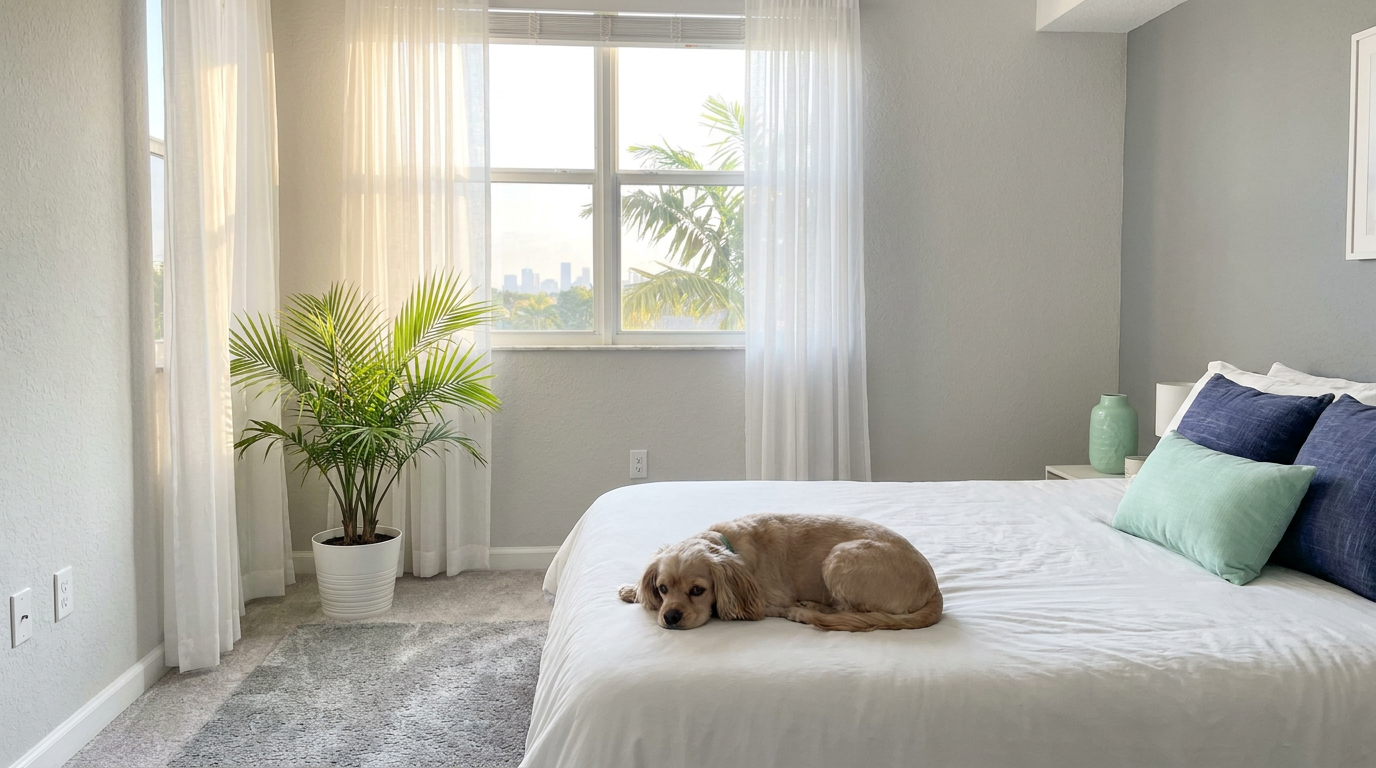
ESA Cats in Florida: Quiet, Low-Maintenance Companions for Renters
If you're renting in Florida and thinking about an emotional support cat, you're not alone. Cats are one of the most common ESA choices for apartment living, they're quiet, they don't need daily walks, and they can be a good fit for smaller units. But before you bring one home, there's a process to understand: how a Florida ESA letter actually works, what the law requires, and how to set your cat (and your lease) up for success.
This guide walks through that process step by step, using plain language and no shortcuts. An esa cat in Florida isn't something you order online with a credit card and a quiz, it's a legitimate accommodation that starts with a licensed clinician's individualized evaluation.
Why Cats Work Well as ESAs for Florida Apartments
Cats tend to suit apartment life for a few practical reasons:
- Lower noise profile. Cats generally vocalize less than dogs, which matters in shared-wall buildings.
- No yard requirement. A litter box handles bathroom needs, so there's no need for outdoor space or scheduled walks.
- Independent temperament. Many cats do fine with a normal work schedule, which can suit renters who are out of the apartment for stretches of the day.
- Smaller footprint. Litter boxes, scratching posts, and cat trees take up far less room than large-breed dog gear.
That said, whether an emotional support cat in Florida is the right fit for you specifically is a clinical question, not a lifestyle one. A licensed mental health professional will look at your individual circumstances and determine whether an ESA is therapeutically appropriate for you, a cat is one option among several. For a broader comparison of species, see our guide on choosing the best emotional support animals for Florida apartments.
What You'll Need Before You Start
Gather these before you begin the process:
- A clear sense of why you're considering an ESA, you don't need a diagnosis in hand, but the clinician will ask about your history and current needs.
- Any existing mental health records or provider contacts, if you have them (not required, but can speed up an evaluation).
- Your current lease or a copy of your landlord's pet policy.
- Basic cat supplies: litter box, unscented litter, food and water bowls, a scratching post, and a carrier for vet visits.
- Awareness of your building's specific rules on unit size, HOA restrictions, and any breed- or species-neutral pet deposits (ESAs are generally exempt from pet fees under the Fair Housing Act, but it helps to know what the standard policy is before you request an exception).
Step-by-Step: Getting an ESA Cat Set Up in Florida
Step 1: Understand Florida's legal requirement first
Florida Statute 760.27 requires that the healthcare practitioner issuing your ESA letter be licensed in Florida, or have an established in-person relationship with you prior to issuing the letter. This is a real legal requirement, not a formality. An out-of-state, online-only provider with no Florida license and no prior relationship to you cannot lawfully issue a valid Florida ESA letter under this statute. Any legitimate service should be upfront with you about this before you pay for anything.
Step 2: Schedule an evaluation with a Florida-licensed clinician
This means an LCSW, LMHC, LMFT, psychologist, psychiatrist, or another licensed mental health or primary-care provider who is licensed in Florida (or already has an established relationship with you). The evaluation is individualized, the clinician talks with you about your circumstances and makes their own determination. Many people with anxiety, depression, PTSD, or similar conditions find that an ESA is helpful, but that's a conclusion a clinician reaches case by case, not something guaranteed in advance. If you're unsure whether your situation might qualify, our page on anxiety ESA eligibility in Florida walks through what clinicians typically evaluate.
Step 3: Complete the clinical evaluation honestly
Answer questions about your day-to-day functioning, stressors, and history as accurately as you can. The clinician isn't looking for a specific "right answer", they're forming an independent clinical judgment. Rushing or exaggerating doesn't speed up a legitimate process and can undermine the validity of the letter later if it's ever questioned.
Step 4: Receive your letter, if the clinician determines it's appropriate
If, after the evaluation, the clinician determines an ESA is appropriate for you, they'll issue a signed letter on their letterhead, including their license information. Approval isn't automatic or guaranteed, it depends on the clinician's individual assessment. There's no such thing as an "ESA registry," "ESA certification," or official ESA ID card; a signed letter from your licensed clinician is the only document that carries legal weight under the Fair Housing Act.
Step 5: Choose (or confirm) your cat
Your ESA letter doesn't specify a species in most cases, but if you're selecting a cat specifically for temperament suited to apartment life, look for calm, adaptable personalities over kittens with high energy levels. Rescue organizations and shelters can often tell you a cat's general disposition from time spent observing them.
Step 6: Prepare your apartment
Set up a litter box away from food and high-traffic areas, provide a scratching post to protect furniture and flooring (landlords still expect normal wear-and-tear standards), and create a quiet space where your cat can settle in during the first few weeks.
Step 7: Submit your accommodation request to your landlord
Provide your landlord or property manager with a written request for a reasonable accommodation, along with your ESA letter. Under the Fair Housing Act, HUD's guidance (Notice FHEO-2020-01, "Assessing a Person's Request to Have an Animal as a Reasonable Accommodation Under the Fair Housing Act") outlines how housing providers should evaluate these requests. A landlord generally cannot charge pet rent or a pet deposit for a legitimate ESA, though normal damage liability still applies.
HUD's FHEO-2020-01 notice is the federal reference point most housing providers and tenants use to evaluate ESA accommodation requests under the Fair Housing Act.
Step 8: Set basic expectations and routines
Cats don't require obedience training the way service animals do, but a bit of structure helps, consistent feeding times, a stable litter box location, and calm handling during the adjustment period. If you want a primer on setting expectations for any ESA species, see ESA training basics for Florida renters.
Step 9: Keep documentation current
Many clinicians recommend periodic reevaluation, especially if a landlord or new lease requires updated documentation. Keep a copy of your letter and any correspondence with your housing provider in one place.
Common Mistakes to Avoid
| Mistake | Why It Causes Problems |
|---|---|
| Buying a "certificate" or "registration" online instead of getting a real letter | These have no legal standing and HUD has explicitly warned they're not valid documentation |
| Using an out-of-state, online-only provider with no FL license or prior relationship | Violates FL Statute 760.27; the letter may not hold up if challenged |
| Assuming the letter guarantees airline travel accommodations | The DOT removed ESA protections from the Air Carrier Access Act in 2021; airlines now treat ESAs as regular pets |
| Skipping the litter box setup plan | Poor placement is a leading cause of litter box avoidance and resulting property damage disputes |
| Assuming approval is automatic | Every evaluation is individualized; a clinician may determine an ESA isn't the appropriate recommendation for a given person |
Tips for a Smoother Process
- Ask upfront whether the clinician is Florida-licensed or has an established relationship with you, a legitimate provider will answer this without hesitation.
- Keep your accommodation request in writing, even if your landlord is responsive by phone or email first.
- If you're weighing a cat against another species, read through the apartment-specific comparison before committing to supplies and setup.
- Watch for red flags like guaranteed approval, instant letters, or promises of a national ESA database, none of these are part of a legitimate process.
What to Expect
Many renters find that a well-suited ESA cat fits comfortably into apartment life once the household settles into a routine, though individual results vary and depend on the cat's temperament, the living space, and your own circumstances. A licensed clinician's evaluation is the step that determines whether an ESA cat is appropriate for you in the first place, everything after that, from apartment setup to landlord communication, follows from having that documentation done correctly.
Disclaimer
This article is for general informational purposes only and is not medical, mental-health, or legal advice. Whether an emotional support animal may be appropriate for you is a determination made by a licensed mental health professional based on an individual evaluation. For questions about your eligibility, consult a Florida-licensed clinician. For landlord disputes or questions about your rights under the Fair Housing Act, consult a Florida-licensed attorney or your local legal aid office.
Ready to start your Florida ESA letter?
Licensed Florida clinician review. Compliant with state law.
Start My Florida ESA Letter