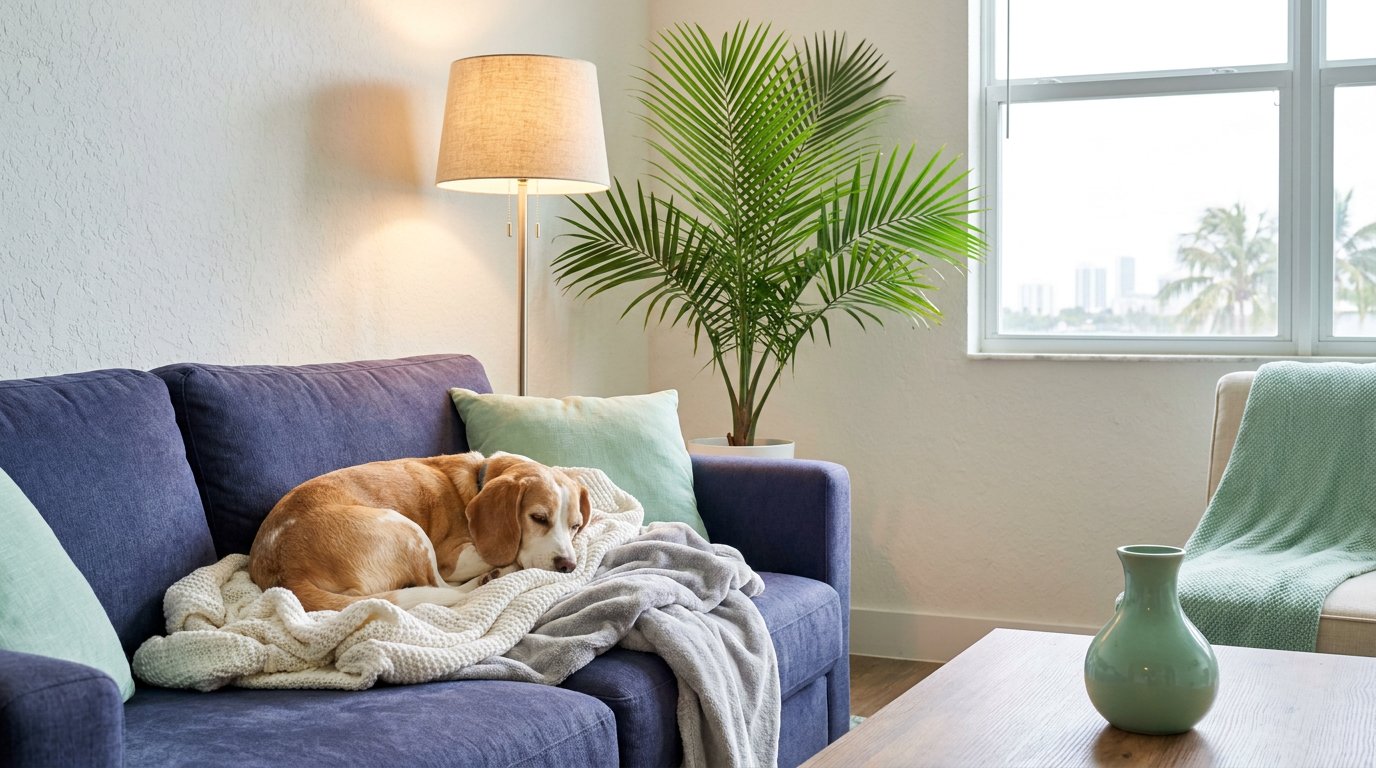
ESA Dogs in Florida: Best Breeds for Apartment Living and Anxiety Support
If you live in a Florida condo, townhome, or apartment complex and you're considering an emotional support animal, the breed you pick matters almost as much as the letter itself. Small square footage, shared walls, HOA rules, and Florida's heat and humidity all shape which dogs actually thrive in this kind of home. A dog that's wonderful for a rural five-acre property can be miserable, and miserable to live with, in a 900-square-foot unit on the third floor.
This list rounds up the small and mid-size ESA dog breeds Florida apartment dwellers tend to do best with, based on temperament, exercise needs, noise level, and how well each breed tolerates Florida's climate. It's meant as a starting point for your own research, not a substitute for a clinical opinion. Whether a dog, or any animal, is appropriate for your specific situation is something a licensed mental health professional determines after evaluating you individually. If you're not sure whether your anxiety or another condition may qualify you for an ESA in Florida, our guide to anxiety and ESA eligibility in Florida walks through what that evaluation actually looks like.
Do Florida Apartments Have to Accept Any Breed as an ESA?
Under the federal Fair Housing Act, and HUD's guidance in Notice FHEO-2020-01, a housing provider generally can't deny a legitimate emotional support animal based on breed, size, or weight the way they might with an ordinary pet. Reasonable accommodation requests are supposed to be evaluated case by case, not filtered through a generic "no pets over 25 pounds" or breed-restriction policy.
That said, "generally" is doing real work in that sentence. Landlords can still push back if a specific animal poses a direct threat to others or would cause substantial physical damage to the property, and that determination has to be based on the individual animal's actual conduct, not a stereotype about its breed. Some HOA and condo boards misunderstand this and try to apply blanket breed bans anyway, which is exactly where documentation and knowing your rights matter. We cover the mechanics of this in detail in breed restrictions and ESA dogs in Florida, including what to do if a property manager tries to reject your ESA based on breed alone.
One more Florida-specific point worth stating plainly: under Florida Statute 760.27, the health care practitioner who writes your ESA letter has to be licensed in Florida, or have an established, in-person relationship with you as a patient or client. A letter from an out-of-state, online-only provider with no connection to Florida generally will not satisfy this requirement, and a landlord is entitled to ask for supporting information consistent with the statute. Choosing the right breed doesn't help much if the letter behind it isn't valid under state law.
10 Best ESA Dog Breeds for Florida Apartment Living
Each of these breeds tends to do well in smaller Florida homes because of low-to-moderate exercise needs, manageable noise levels, and (in most cases) a coat and body type that copes reasonably well with heat and humidity. A licensed clinician, not a breed list, will ultimately determine whether an ESA is therapeutically appropriate for you, but this should help you think through what "a good fit" actually looks like day to day.
1. Cavalier King Charles Spaniel
Cavaliers are often described as one of the most naturally affectionate small breeds, and that reputation holds up in apartment settings. They tend to want to be near their person rather than off exploring, which makes them easy to keep calm in a one- or two-bedroom unit. Their exercise needs are modest, a couple of short walks and some indoor playtime usually covers it, so Florida's midday heat is less of an obstacle than it is for higher-energy breeds.
They're also generally quiet by small-dog standards, which matters in shared-wall buildings where a vocal dog can create noise complaints or neighbor friction. Many people who experience anxiety find that a dog with this kind of steady, present temperament is easier to settle into a daily routine with than a more independent or high-strung breed.
Practical takeaway: A strong pick if you want a lap-oriented companion that adapts easily to condo or apartment life without demanding heavy exercise.
2. French Bulldog
French Bulldogs are compact, low-energy, and famously content to spend most of the day near their owner, which is part of why they've become such a common apartment breed nationally. Their exercise requirements are low enough that short indoor and shaded outdoor time is usually sufficient, and they're not prone to excessive barking, an underrated feature in buildings with thin walls.
The tradeoff is Florida-specific and important: Frenchies are a brachycephalic (flat-faced) breed, and that anatomy makes them significantly less tolerant of heat and humidity than most other dogs. Anyone considering this breed in Florida needs a plan for keeping the dog in air conditioning during peak heat months and should talk to a veterinarian about the breed's known respiratory and heat-sensitivity risks before committing.
Practical takeaway: Great apartment temperament, but only a good fit in Florida if you can reliably keep the dog cool and consult a vet about breed-specific health risks first.
3. Bichon Frise
Bichons are small, cheerful, and generally people-focused, with a coat that (with regular grooming) doesn't shed heavily, a plus for renters worried about allergens or cleaning in a small space. They tend to be adaptable to apartment routines and don't require much outdoor acreage to stay content.
Their friendly, upbeat disposition is often cited by owners as a mood-lifting presence, though of course any specific therapeutic benefit is something only a clinician can assess for your situation. Bichons do best with regular grooming appointments, which is worth factoring into your budget alongside the letter and any pet fees your building charges.
Practical takeaway: A good low-shedding option for small units, provided you're prepared for the grooming upkeep that comes with the coat.
4. Shih Tzu
Shih Tzus were essentially bred to be companion dogs, and that shows in how well they adapt to indoor, apartment-centered living. They don't need much exercise, they're generally calm indoors, and they tend to bond closely with one or two people, which many owners find comforting during anxious moments.
Like French Bulldogs, Shih Tzus have a shortened muzzle and can struggle in extreme heat, so Florida owners should limit outdoor time during the hottest parts of the day and keep an eye on breathing during walks. Their long coat also needs regular brushing or a shorter "puppy cut" to stay manageable in humid weather.
Practical takeaway: A classic lap-dog fit for small Florida homes, best walked in early morning or evening to avoid peak heat.
5. Maltese
Maltese dogs are tiny, typically well under 10 pounds, which makes them easy to manage in even the smallest studio or one-bedroom apartment. They're affectionate, tend to follow their owner from room to room, and generally don't need more than short indoor play sessions and brief walks to stay physically satisfied.
Their small size also makes them easier to transport for errands, vet visits, or building common areas, which some renters with anxiety find genuinely helpful for maintaining a routine. As with other small, silky-coated breeds, regular grooming keeps their coat from matting in Florida's humidity.
Practical takeaway: One of the most space-efficient small ESA dog breeds Florida renters can consider, ideal for compact units.
6. Pug
Pugs are sturdy, sociable, and known for a comedic, easygoing temperament that many owners describe as genuinely mood-lifting to be around. They don't require intense exercise, a couple of short walks plus indoor time is typically enough, and they tend to form strong attachments to their household.
Pugs share the brachycephalic heat sensitivity of French Bulldogs and Shih Tzus, and Florida's combination of high heat and high humidity is a serious consideration for this breed. Air conditioning isn't optional for a Pug living in Florida; it's closer to a medical necessity during summer months, so factor that into both your living situation and your vet conversations.
Practical takeaway: A warm, low-energy companion breed, but only workable in Florida with dependable indoor climate control.
7. Toy or Miniature Poodle
Poodles, especially the toy and miniature varieties, combine a low-shedding coat with high intelligence and trainability, which can make apartment life smoother in practical ways, easier to house-train, easier to teach calm behavior around neighbors and shared hallways. Their coat is also a common choice for people managing mild allergen sensitivities, though no dog is fully hypoallergenic.
They do have more mental energy than some other breeds on this list, and without enough engagement they can become anxious or vocal themselves, which is worth thinking about if the ESA is meant to support your anxiety rather than add to household stress. Puzzle toys, short training sessions, and consistent routines tend to work well for this breed in a smaller home.
Practical takeaway: A smart, low-shedding option that does best with a little mental stimulation built into your daily routine.
8. Havanese
Havanese dogs are small, sturdy, and were originally bred as companion animals in Cuba's warm climate, which gives them a natural edge in tolerating Florida's weather compared to many other toy breeds. They're generally cheerful, adaptable, and known for bonding closely with their household.
They tend to do poorly with long stretches of alone time and can develop separation-related stress, so this breed fits best with owners who work from home, keep a flexible schedule, or can arrange regular company for the dog during the day. Their exercise needs are modest and well suited to apartment living.
Practical takeaway: A heat-tolerant, people-oriented small breed, best matched with an owner who isn't away from home for long, unpredictable stretches.
9. Chihuahua
Chihuahuas are among the smallest dog breeds and require very little physical space or exercise, which makes them one of the most apartment-compatible breeds by size alone. Short indoor play and brief walks are usually enough, and their small size makes waste cleanup and general upkeep simpler in a shared building.
They can be more vocal and reactive than some other breeds on this list, particularly around unfamiliar people or noises in hallways and elevators, so early socialization and some basic training go a long way toward making them good neighbors. Their short coat also handles Florida heat reasonably well, though direct sun and hot pavement still call for caution.
Practical takeaway: Extremely space-efficient, but budget time for socialization and basic manners training in a building with shared common areas.
10. Corgi (Pembroke or Cardigan)
Corgis are a step up in size from most breeds on this list, but they're included because their temperament, loyal, alert, and eager to please, works well for people who want a more substantial presence without needing a large yard. They're intelligent and trainable, which helps with apartment etiquette around noise and shared spaces.
Corgis do need more daily exercise than the toy breeds above, and their double coat sheds noticeably, especially in Florida's warm climate where they may blow coat more than once a year. Owners considering a Corgi should be honest about whether they can commit to regular walks and grooming in a smaller home.
Practical takeaway: A good mid-size option for a more active household, provided you can meet its higher exercise and grooming needs.
A Note on Florida Heat and Breed Health
Several breeds on this list, French Bulldogs, Shih Tzus, and Pugs in particular, have flattened faces that make it harder for them to regulate body temperature. Florida's combination of heat and humidity raises the stakes on this in a way that milder climates don't. If you're drawn to one of these breeds, talk with a veterinarian about heatstroke risk, appropriate outdoor scheduling, and whether the breed is realistic for your specific building and lifestyle before you commit. A dog that's medically struggling isn't going to support anyone's mental health, including yours.
How to Get Your Florida ESA Letter for Any Breed
Breed choice and letter validity are two separate questions, and it's worth keeping them that way. Florida Statute 760.27 requires that the letter come from a licensed health care practitioner who is either licensed in Florida or has an established, in-person relationship with you. This applies no matter which breed, or which animal, you're seeking accommodation for.
A legitimate process starts with an honest conversation with a licensed clinician about your mental health and daily functioning, not with picking a dog first and working backward. If you're wondering whether your anxiety, or another condition, may support an ESA recommendation, our anxiety and ESA eligibility in Florida guide explains what that evaluation typically covers. And if you're still comparing animal types beyond dogs, our broader roundup of the best emotional support animals for Florida apartments is a useful next stop.
At Cheap ESA Letter Florida, our position is straightforward: honest, upfront pricing, real Florida-connected clinicians, and no shortcuts around what state law actually requires. We don't promise automatic approval, because a real clinician evaluates every person individually, and we don't traffic in "ESA registries" or ID cards, because HUD has been clear those products carry no legal weight. What we do offer is a transparent path to a properly documented letter if a licensed clinician determines an ESA is appropriate for you.
Disclaimer
This article is for general informational purposes only and is not medical, mental health, or legal advice. It does not diagnose any condition and does not guarantee that any individual will qualify for an emotional support animal. Whether an ESA, or any particular breed, is appropriate for you is a determination that can only be made by a licensed mental health professional after an individual evaluation. If you are dealing with a housing dispute involving an ESA in Florida, consult a Florida-licensed attorney or contact your local legal aid office for guidance specific to your situation.
Ready to start your Florida ESA letter?
Licensed Florida clinician review. Compliant with state law.
Start My Florida ESA Letter